Building Energy & Efficiency Workbench
Estimate envelope heat transfer, insulation, infiltration, degree-day energy, HVAC, lighting, solar gains, EUI, heat recovery, and payback.
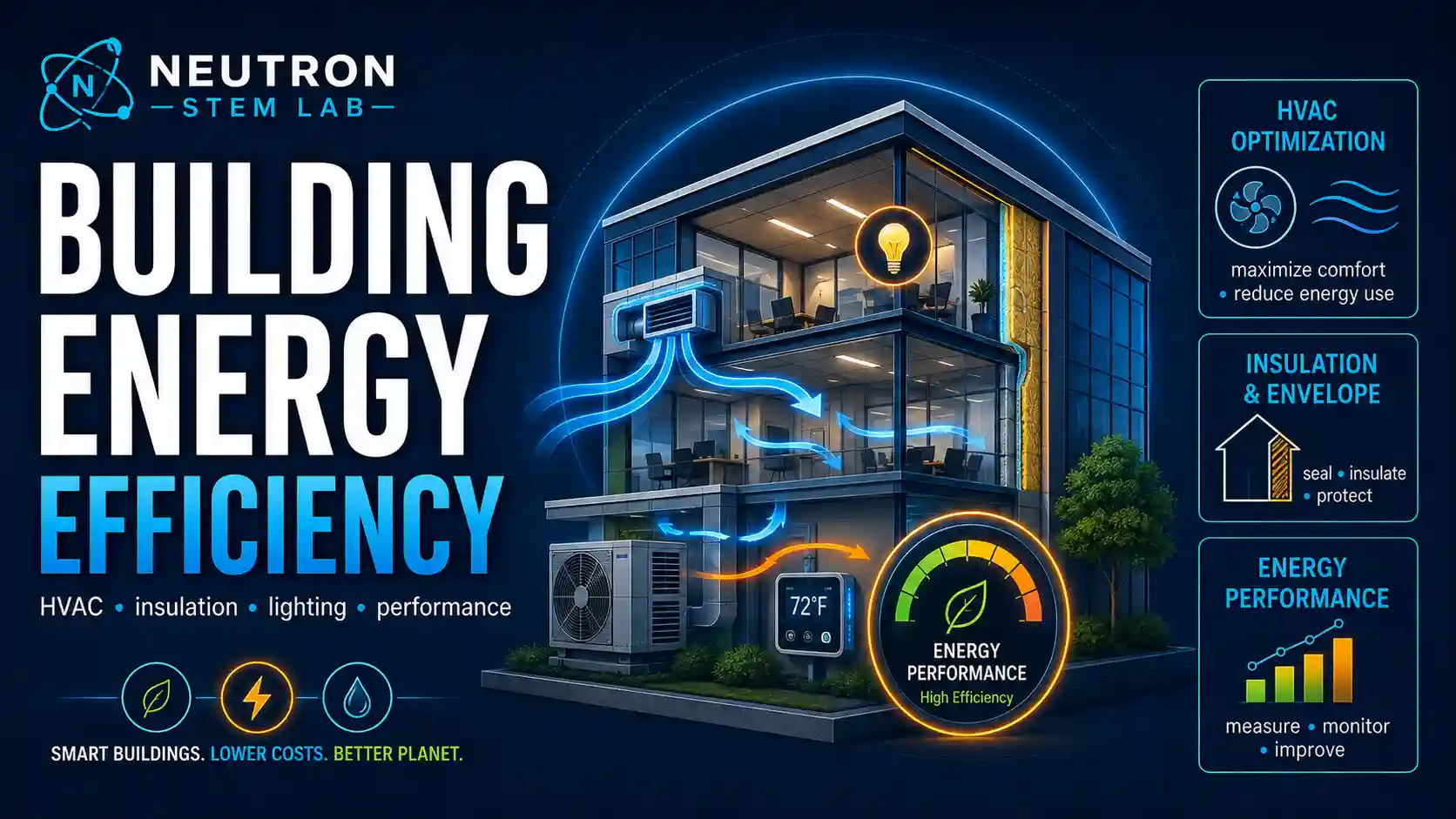
Engineering reference
Building Energy & Efficiency: theory, method, and sources
This environmental & energy engineering workspace publishes 10 governing equations, 5 stated assumptions, 1 documented boundary, and 2 sources so the numbers it returns can be checked rather than taken on trust.
How this tool works
Ten modules cover envelope heat loss, layered assembly R-values, infiltration, degree-day energy estimates, HVAC electrical demand, lighting energy, solar gain, energy use intensity, heat recovery, and simple payback.
The degree-day and payback modules connect a physical retrofit to an annual energy figure and then to a financial one, which is the sequence used in a preliminary energy audit.
Calculators and topics covered
- building energy
- efficiency
- HVAC
- insulation
- U-value
- R-value
- degree days
- EUI
- heat recovery
- lighting energy
Core equations
Method and assumptions
Assumptions
- Steady-state heat transfer with constant U-values; thermal mass and dynamic response are not modelled.
- Degree-day estimates assume a fixed balance point temperature and a constant system efficiency across the season.
- Infiltration uses a single air change rate rather than a pressure-driven or wind-dependent model.
- Solar gain uses a single irradiance value with no shading geometry, orientation, or hourly sun path.
- Simple payback ignores discount rate, fuel escalation, maintenance, and equipment replacement.
Limitations and design boundaries
- Educational screening calculations only. Building design and retrofit decisions require hourly weather, schedules, controls, moisture, thermal bridges, equipment curves, codes, commissioning data, and qualified analysis.
Sources and references
Primary sources are preferred for ratings, standards, manufacturer data, and externally defined constants.
- ASHRAE Handbook—Fundamentals
- Kreider et al., Heating and Cooling of Buildings